Problems › Fix this season
Damp or musty crawl space
A damp crawl space pushes moist, musty air up into the rooms above and slowly rots the wood holding the floor up. Open vents usually make it worse in a humid summer. The fix is to stop water getting in, seal the floor and walls with a liner, and control the humidity.
What is actually happening
A bare dirt floor gives off moisture all year. Open vents bring in humid air in summer, which condenses on the cool joists and ducts. Water may also run in during storms and sit in low spots. All of that moisture rises into the house, because air moves upward through a building. The rooms above end up with the crawl space's air: musty, humid, and harder to heat and cool.
Signs to look for
- A musty smell on the ground floor, strongest in humid weather.
- Insulation under the floor that is damp, sagging or has fallen.
- Condensation on ducts or pipes, white fuzz or dark staining on the joists.
- Standing water or mud after rain.
- Cold floors in winter and higher energy bills than the house should have.
What fixes it
- Handle the water. Extend downspouts and fix grading so less water reaches the crawl space. If water still collects, a drain and sump pump inside removes it.
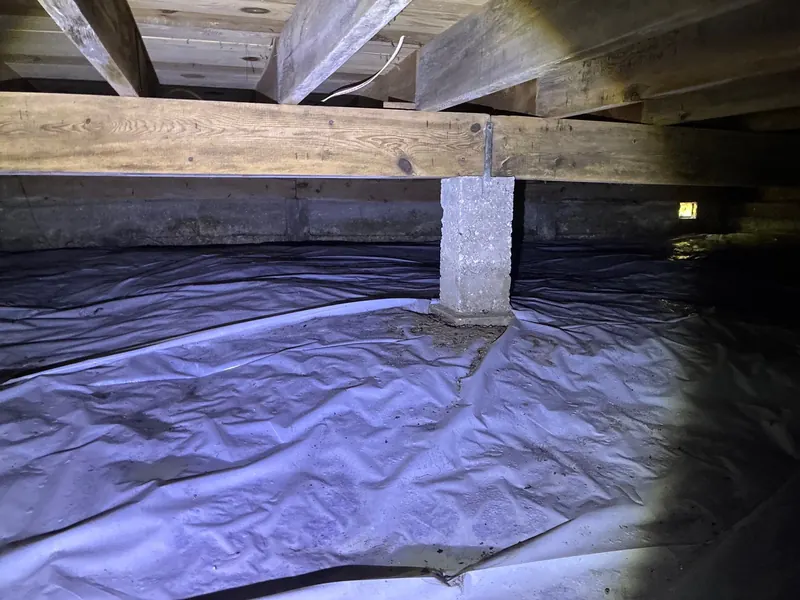
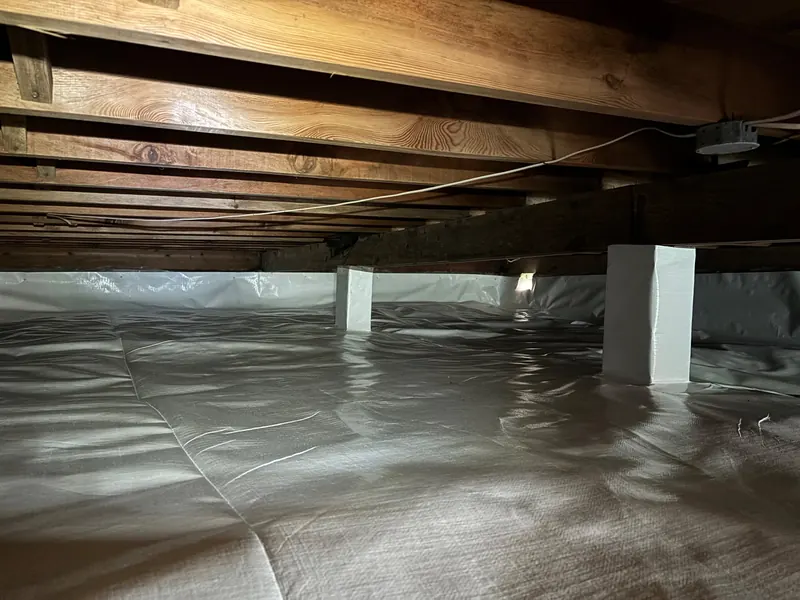
- Seal the space. A thick liner across the floor and up the walls, sealed at the seams, with the vents closed. This is encapsulation.
- Control the humidity. A dehumidifier sized for the space keeps the sealed crawl space dry year round.
Done together, those turn the crawl space into a dry, sealed part of the house. Done one at a time, each helps but the moisture usually finds a way around.
What makes it cheaper or more expensive
- Cheaper: a mostly dry space that only needs a liner, easy access, a smaller footprint.
- More expensive: standing water that needs a drain and pump, existing mold or rot that has to be treated or replaced, a large footprint, a very low or cluttered space.
If you do nothing
Damp air keeps feeding mold and rot. Over years that becomes soft joists and sagging floors, which cost far more to fix than the moisture did. The smell and the humidity upstairs stay.
What the repair looks like
Photos from a completed job, taken by the crew. Not staged.
Questions people ask
Should the crawl space vents be open or closed?
In this climate, open vents let humid summer air in, where it condenses on cool surfaces and keeps everything damp. Sealing the crawl space and controlling moisture works better than ventilating it. Closing vents without sealing the floor and dealing with water is not enough on its own.
Is the musty smell upstairs really from the crawl space?
Very often, yes. Air moves upward through a house, so a large share of the air in the rooms above comes through the crawl space first, carrying its moisture and smell with it.
What is encapsulation?
A heavy liner sealed across the dirt floor and up the walls, so ground moisture stays out of the air, often with a dehumidifier or a drain and sump pump if water collects. It turns the crawl space into a dry, sealed part of the house.
Is a plastic sheet on the floor the same thing?
A thin sheet laid loose on the dirt helps a little and tears quickly. Encapsulation uses a thick liner sealed at every seam and up the walls, which is what actually stops the moisture.
Does a damp crawl space affect the floors?
Yes. Damp air softens and rots joists and posts over time, which is how a damp crawl space turns into a sagging floor. See the sagging floors page.