Problems › Fix this season
Sagging or bouncy floors
A sagging or bouncy floor almost always means the structure under it needs support: joists spanning too far, a beam that has settled, posts that have sunk or rotted, or wood softened by a damp crawl space. It is fixed from below with beams and adjustable steel posts on proper footings, without lifting the house.
What is actually happening
Floors sit on joists, joists sit on beams, and beams sit on posts or on the foundation walls. When any of those gives, the floor above dips. The common causes:
- Joists spanning too far. Older houses often have joists carrying more span than they should, or joists that were notched and cut for plumbing and ducts.
- Posts that have settled. A post standing on soil, a brick, or a small pad sinks over the years, and the beam goes with it.
- Rot. A damp crawl space softens joist ends and posts. A beam end sitting in a wet pocket in the wall is a classic.
- A removed wall. A wall taken out during a remodel that was quietly holding the floor up.
Signs to look for
- A visible dip, or a ball that rolls to one spot.
- Doors and windows that stick, or gaps at the top of interior door frames.
- Cracks in drywall above door corners, or a gap between the floor and the baseboard.
- Bounce or vibration when someone walks across the room.
What fixes it
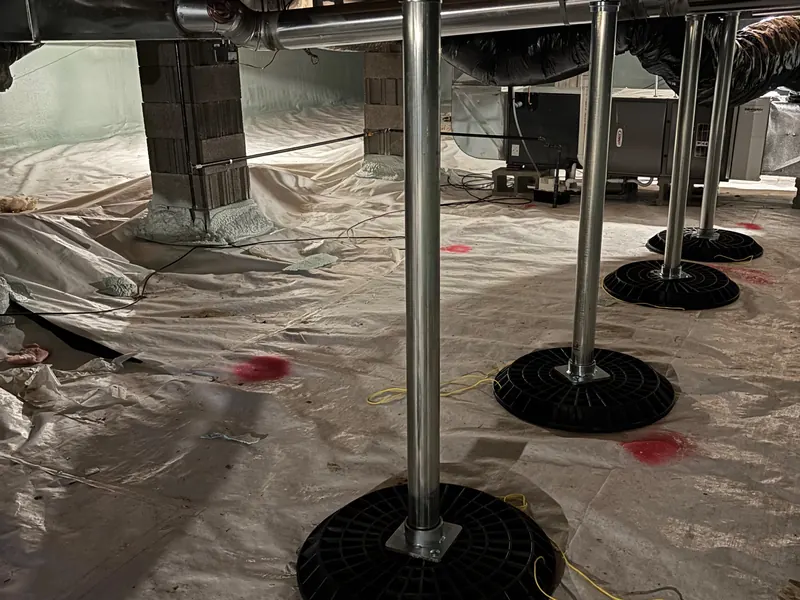
The repair is done from underneath. A beam is placed under the sagging span and carried on adjustable steel posts standing on concrete footings, so they cannot sink. The posts are raised a little at a time, over days or weeks if the sag is large, so the house adjusts without cracking. Rotted joists are sistered with new lumber alongside. If the crawl space is damp, the moisture is dealt with so the new wood does not follow the old.
What makes it cheaper or more expensive
- Cheaper: a single dip under one room, a crawl space with room to work, sound wood that only needs support.
- More expensive: rotted beams or joist ends that need replacing, a very low crawl space, several rooms affected, or a damp crawl space that has to be fixed at the same time.
If you do nothing
Sag gets slowly worse. Doors stick more, cracks widen, and wood that is rotting keeps rotting. Supports added early are a straightforward job; replacing beams later is not.
What the repair looks like
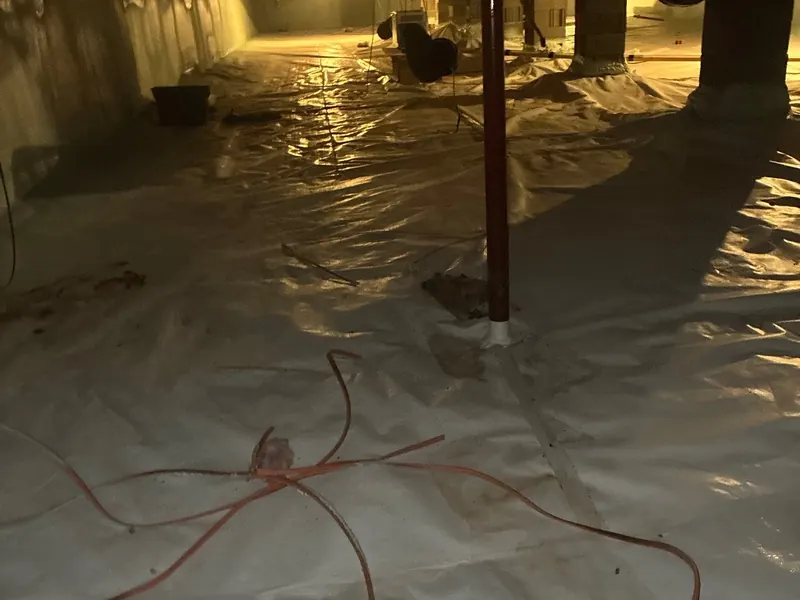
Photos from a completed job, taken by the crew. Not staged.
Questions people ask
Is a sagging floor a foundation problem?
Usually not the foundation walls themselves. Most sagging is in the floor structure: joists, beams and posts in the crawl space or basement. That is easier and cheaper to fix than a foundation, which is why it is worth having it looked at rather than assuming the worst.
Can the floor be levelled again?
Often, gradually. Adjustable steel posts on proper footings lift the beam a little at a time so the house is not shocked. A floor that has sagged for decades may not come fully level without cracking plaster, and the inspection will say how far it can safely go.
Why does my floor bounce when someone walks past?
Bounce usually means the joists are spanning further than they should without support, or a beam has settled. Adding a beam and posts under the middle of the span stiffens it.
Does the house have to be lifted?
No. Supports go in under the existing beams from the crawl space or basement. Nothing upstairs is disturbed apart from the doors that stop sticking.
Is a damp crawl space connected to this?
Often. Damp air softens and rots wood over time and lets posts settle into wet soil. If the crawl space is damp, fixing the moisture is part of stopping the sag from coming back. See the crawl space page.